
Fashion has always pinched ideas from sport, but few have lasted on the page and on the rail like riding. You see it in the cut of a tailored jacket, the shape of a boot, the tidy confidence of a leather belt with a brass buckle. Even people who have never set foot in a tack room recognise the appeal. Equestrian style suggests discipline, heritage and a slightly old-fashioned polish that works in an era of fast trends and synthetic novelty.
What stands out in 2026 is how these references have become less about costume and more about detail. Rather than dressing head to toe in “country” gear, people are choosing a single nod: a snaffle-bit fastening on a loafer, a stirrup silhouette on a bag charm, a horse-head motif worked into something understated. That shift matters because it turns riding culture from a theme into a design language.
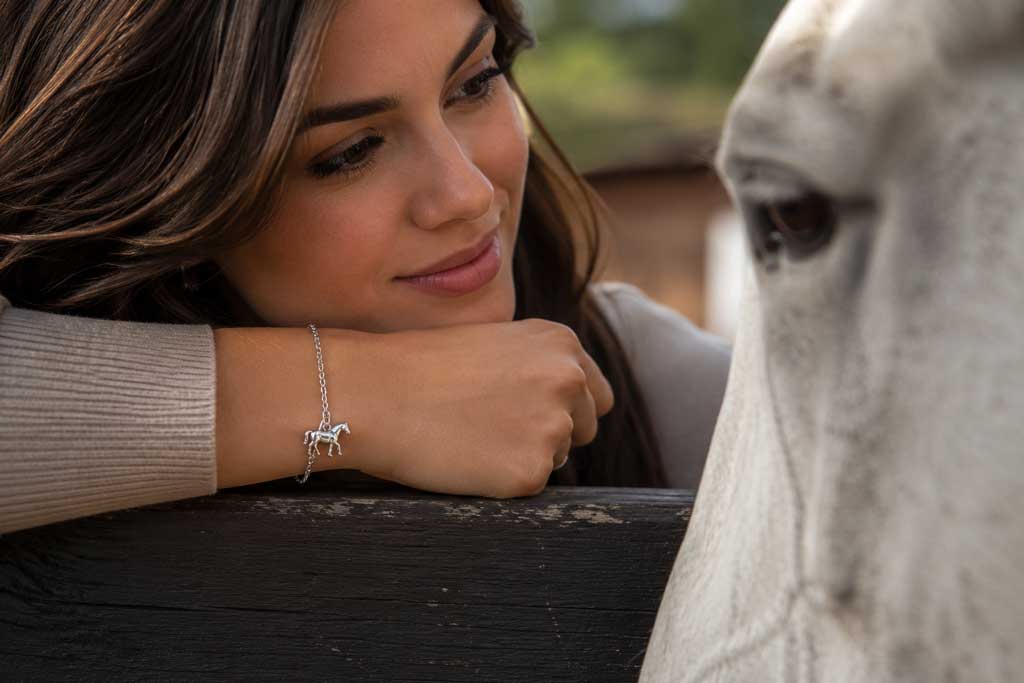
The same can be seen in equestrian jewellery, which has quietly moved from niche gift-shop territory into the broader conversation around personal style. The best pieces are not loud or novelty-led. They borrow lines, hardware and symbols from the horse world in a way that feels crisp and wearable. For people drawn to objects with a backstory, that makes them more interesting than trend jewellery that could have come from almost anywhere.
Why the look still lands
- It carries history without feeling dusty.
- It favours craft, especially leatherwork and metal detailing.
- It reads as practical, which often makes it look more expensive.
There is also a wider cultural reason these motifs endure. Riding sits at a peculiar crossroads of sport, class, leisure and tradition, so its visual codes are instantly legible. A stirrup or bit is not just decorative, it hints at a whole world. In a crowded market, that sort of specificity is rare. That may be why stable-inspired design keeps resurfacing: not because everyone wants to look horsey, but because the aesthetic offers structure, restraint and a sense of story.
Featured image credit: AI generated.